Skip to content Skip to footer
Cosmetic Dentistry

Professional Teeth Whitening in Alanya, Turkey

Professional teeth whitening uses a bleaching agent, applied and monitored by a dentist, to lighten natural tooth enamel by several shades. It works only on natural tooth structure — veneers, bonding, or crowns don’t change color the same way, so whitening should generally happen before, not after, cosmetic restorations are placed. A typical in-office session takes roughly an hour.

What Teeth Whitening Is and Who It Suits

Whitening lightens the natural color of tooth enamel using a peroxide-based gel that breaks down stains within the tooth structure, rather than removing surface plaque the way a cleaning does. It suits patients whose teeth have darkened over time from coffee, tea, red wine, tobacco, or simply age, and who want a lighter shade without changing tooth shape.

It does not suit every kind of discoloration. Stains from certain antibiotics taken during tooth development (like tetracycline) or from fluorosis often respond less predictably to whitening and may need a different approach, such as bonding or veneers, to get an even result. Whitening also only works on natural enamel — it cannot lighten existing veneers, bonded resin, or crowns, so patients who already have visible restorations need to plan whitening carefully so the shades stay matched, not lighten unevenly around them.

Dt. Cebrail Sağlam, dentist in Alanya
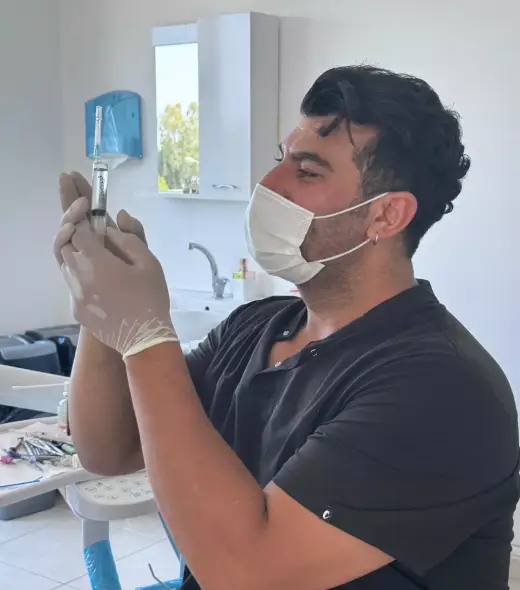
Dt. Cebrail Sağlam preparing an anaesthetic during treatment

How the Procedure Works

  1. Assessment. The dentist checks for active decay, gum disease, or existing restorations in visible teeth before whitening, since all of these affect whether whitening is appropriate and how the result will look.
  2. Shade recording. The current tooth shade is recorded so the change can be measured against a consistent starting point.
  3. Application. A bleaching gel is applied to the teeth, and gums are protected from contact with it, since the gel is stronger than over-the-counter products.
  4. Activation and timing. The gel is left on the teeth for a set period, sometimes with a light used to help activate it, depending on the product and method used.
  5. Rinsing and shade check. The gel is removed, and the new shade is compared to the starting point to see how much lightening has occurred.
  6. Take-home follow-up, where relevant. Some whitening plans include custom trays and gel for the patient to continue treatment at home over subsequent days, rather than relying entirely on a single in-office session.

How Many Sessions and How Long It Takes

A single in-office session commonly takes about an hour, though this varies by product and how much lightening is being targeted. Some patients see a noticeable change after one session; others need a second session or a course of take-home trays over one to two weeks to reach the shade they want. Whitening is not usually a permanent, one-time change — the degree of lightening and how long it lasts both depend on the individual and their habits afterward.

Contraindications and Limitations

  • Pregnant or breastfeeding patients are generally advised to postpone elective whitening, as a precaution rather than because of a specific known risk.
  • Active tooth decay or gum disease should be treated first — whitening gel can irritate exposed dentin or inflamed gum tissue.
  • Existing veneers, bonding, or crowns will not change color with whitening, so whitening around them can create a mismatch; this needs to be planned for, not discovered afterward.
  • Tooth sensitivity is a common temporary side effect during and shortly after treatment; patients with already sensitive teeth may need a gentler protocol or a desensitizing step.
  • Stains from tetracycline or fluorosis often respond less evenly to whitening than surface staining from food, drink, or tobacco, and may need a different treatment approach for a consistent result.
  • Whitening is not permanent. Results fade gradually, especially with continued exposure to staining foods, drinks, or tobacco, so occasional touch-ups are normal, not a sign that the first treatment failed.
Before you decide

Not sure whether this applies to your teeth?

The only way to know is an examination. Ask a question first if you would rather understand the options before booking anything.

Aftercare

Sensitivity to hot or cold in the first day or two after whitening is common and usually settles on its own. Many dentists recommend a short “white diet” — avoiding coffee, tea, red wine, dark sauces, and tobacco — for around 24 to 48 hours after treatment, since the enamel is more porous and prone to picking up stains again right after whitening. Ongoing results depend on diet and habits: patients who continue heavy coffee, tea, or tobacco use will generally see the shade fade faster than patients who don’t, and occasional touch-up sessions are a normal part of maintaining the result rather than a sign something went wrong.

FAQ

Frequently asked questions

Cost depends on the method used and how many sessions are needed to reach the target shade, so it isn’t a fixed number. We don’t publish set prices; a consultation gives an accurate estimate for your case.

It varies by individual — diet, smoking, and how much staining food or drink someone consumes afterward all affect how long the lighter shade holds. Some patients maintain results for a year or more; others notice fading sooner and use occasional touch-ups.

Professional whitening, done under a dentist’s supervision, is generally considered safe for enamel when used as directed. Temporary sensitivity during or after treatment is common but usually resolves on its own within a few days.

No — whitening only lightens natural enamel, not porcelain veneers, crowns, or composite bonding. If you have existing restorations on visible teeth, this needs to be discussed before whitening so the color stays matched, rather than creating a mismatch between natural and restored teeth.

Before. Since veneers and bonding are matched to your tooth shade at the time they’re made, and whitening won’t lighten them afterward, whitening first lets the dentist match new restorations to your brighter, final shade.

They work differently rather than one being universally better: in-office whitening uses a stronger gel for a faster visible change in a single visit, while take-home trays work more gradually over days. Some treatment plans combine both. The right choice depends on the starting shade, timeline, and sensitivity.

Next step

Questions about this treatment?

Every case is different. The most useful first step is an examination, where the options for your teeth can be explained in person.