
Gum Disease Treatment in Alanya
Gum disease treatment addresses inflammation and infection in the tissue that supports your teeth, from early gingivitis to more advanced periodontitis. It usually starts with a thorough professional cleaning below the gumline.
At a glance
Two disease stages
Cleaning is the core treatment
A few sessions, not one fix
Maintenance keeps it from returning
What gum disease is
Plaque is a soft film of bacteria that builds up on teeth every day. Left unremoved, it hardens into tartar that can’t be brushed away and irritates the gums — early inflammation called gingivitis. Left untreated, gingivitis can progress to periodontitis, where infection spreads below the gumline and starts to affect the bone and ligament holding the tooth in place, creating deeper pockets where bacteria collect. Gum treatment addresses this at whichever stage it’s caught, and the earlier it starts, the easier it is to manage.

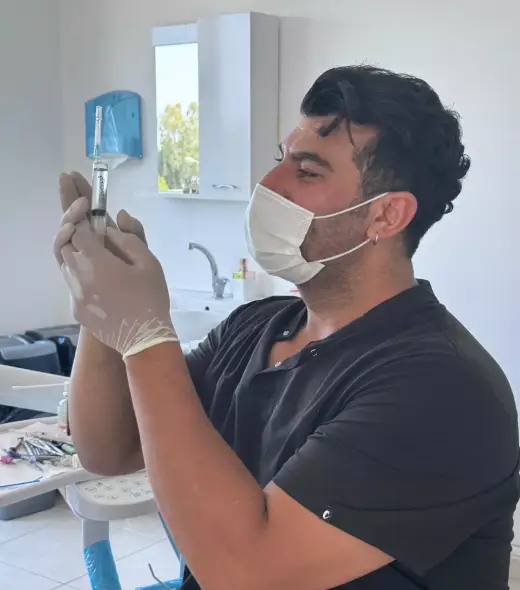
How gum disease is treated
Scaling and root planing
Laser-assisted treatment
Referral for surgical care
How treatment goes
Examination and charting
Scaling and root planing
Re-evaluation
Further care if needed
Not sure whether this applies to your teeth?
The only way to know is an examination. Ask a question first if you would rather understand the options before booking anything.
Limits of gum treatment
Gum treatment reduces inflammation and can stop periodontitis from progressing, but it doesn’t reverse bone that has already been lost, and it isn’t a one-time fix. Gum disease can return if plaque control at home and regular maintenance cleanings aren’t kept up afterward. Deep pockets or advanced bone loss that don’t respond to non-surgical treatment may need referral for further evaluation or surgical care beyond what a routine cleaning can achieve. Receding gums don’t grow back either — treatment stops the disease that caused it, without regrowing the original tissue.
Frequently asked questions
What's the difference between gingivitis and periodontitis?
Gingivitis is inflammation limited to the gum tissue, without any loss of the bone underneath, and it’s reversible with treatment. Periodontitis is more advanced: the infection has spread to affect the bone and ligament supporting the tooth, creating pockets that need professional cleaning below the gumline to manage.
How many sessions does gum treatment take?
It depends on how far the disease has progressed. Gingivitis often improves after one thorough cleaning. Periodontitis is usually treated over two to four visits, plus a follow-up re-evaluation appointment a few weeks later.
What should I expect after treatment?
Gums can feel tender and may bleed a little for a day or two after scaling and root planing, and some sensitivity to hot, cold, or sweet food is common short-term. Gentle brushing and flossing should continue through healing, and avoiding smoking supports recovery.
Can gum disease come back after treatment?
Yes, if plaque control at home and regular maintenance cleanings aren’t kept up. Gum disease is managed on an ongoing basis rather than cured once and forgotten.
Do receding gums grow back after treatment?
Generally no — gum recession doesn’t reverse on its own. Treatment focuses on stopping the disease that’s causing it from progressing further and protecting the exposed root surface, rather than regrowing the original gum tissue.