Skip to content Skip to footer
Treatments

Oral Surgery

Oral surgery covers procedures performed on the teeth, gums, and jawbone that go beyond routine fillings or cleanings — from a straightforward tooth extraction to bone grafting that prepares the jaw for implants. Some of these procedures are handled within general dental practice, while more complex surgical cases are commonly referred to an oral or maxillofacial surgeon, depending on the individual dentist’s scope of practice and the complexity of the case.

What Falls Under Oral Surgery

Oral surgery is a broad category. At the simpler end, it includes routine tooth extractions that any general dentist typically handles. At the more complex end, it includes bone grafting, sinus lifts, and surgical revision of implants — procedures that many general and cosmetic-focused dentists refer out to a colleague with specific surgical training, rather than perform themselves. This split is common and normal in dentistry: a solo practice built around restorative and cosmetic work, for example, will often coordinate with a surgical specialist for the more involved procedures on this page, rather than provide every one of them in-house.

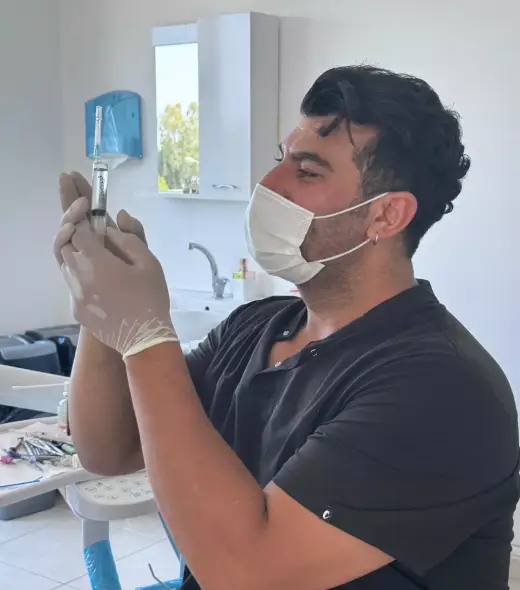
Dt. Cebrail Sağlam, dentist in Alanya
Dt. Cebrail Sağlam preparing an anaesthetic during treatment

Why These Procedures Matter

Many of the procedures below exist to make other treatments possible. Bone grafting and sinus lifts, for instance, are often the step that turns “not enough bone for an implant” into “implant placement is now possible.” Extractions clear the way for dentures, bridges, or a healthier mouth generally. Understanding what each procedure actually involves — rather than only its name — helps set realistic expectations for anyone facing one of them.

How Anaesthesia and Sedation Are Chosen

Almost every procedure on this page starts with a decision about anaesthesia. Simple procedures are typically done under local anaesthesia alone. More involved or longer surgical procedures sometimes add sedation to help an anxious patient stay comfortable and still throughout. Which approach is used for a given case depends on the procedure’s complexity, the patient’s anxiety level, and the equipment and monitoring available at the practice — covered in more detail in the sections on local anaesthesia and conscious sedation below.

Procedures

Simple Tooth Extraction {#simple-tooth-extraction}

A simple extraction removes a tooth that is visible and accessible above the gumline, typically because of severe decay, a fracture, or advanced gum disease that has left the tooth unsalvageable. It’s done under local anaesthesia: the dentist loosens the tooth with specialised instruments and lifts it out in one piece. Healing generally takes about one to two weeks for the gum to close over, though the underlying bone continues remodelling for longer. Aftercare centres on protecting the blood clot that forms in the socket — avoiding rinsing forcefully, smoking, or drinking through a straw for the first day or two, since dislodging the clot can lead to a painful complication called dry socket.

Surgical Tooth Extraction {#surgical-tooth-extraction}

A surgical extraction is needed when a tooth can’t simply be lifted out — most often because it has broken below the gumline, has curved or unusually shaped roots, or hasn’t fully erupted. The dentist may need to make a small incision in the gum and sometimes remove a small amount of bone, occasionally sectioning the tooth to remove it fully. It’s more involved than a simple extraction and typically means a longer recovery, with more noticeable swelling in the first days. Stitches, if placed, are usually removed or dissolve within one to two weeks.

Sinus Lift (Open and Closed) {#sinus-lift}

A sinus lift adds bone volume to the upper back jaw when the sinus sits too close to the bone for an implant to be placed safely. There are two approaches: a “closed” lift, done through the same small opening used for implant placement, which works for smaller height increases; and an “open” (lateral window) lift, done through a small window in the side of the jawbone, used when a larger increase is needed. Bone graft material is packed into the space either way. Healing before an implant can be placed on top commonly takes several months — this is one of the more specialised procedures here, and many general and cosmetic dental practices refer sinus lift cases to an oral surgeon or periodontist.

Bone Grafting {#bone-grafting}

Bone grafting rebuilds jawbone that has thinned or shrunk, most often after a tooth has been missing for a while, or where there wasn’t enough bone volume to begin with. Graft material is placed at the site and, over a period of months, the patient’s own bone gradually grows into and replaces it, creating a stronger foundation for an implant. It’s frequently the step that makes implant treatment possible for patients who were initially told they didn’t have enough bone. Healing time before further treatment varies with the size of the graft, generally ranging from a few months for smaller sites to longer for larger reconstructions.

Bone Graft Material Placement {#bone-graft-material}

This refers to the material itself used in grafting procedures — it can come from the patient’s own body (autograft), a human tissue bank (allograft), an animal source (xenograft), or a synthetic biocompatible material. Each has different handling properties and healing characteristics, and the choice depends on the size and location of the defect being treated, as well as the surgeon’s assessment of what will integrate best for that specific case.

Barrier Membrane Placement {#barrier-membrane}

A barrier membrane is a thin material placed over a bone graft to keep faster-growing gum tissue from invading the graft site before new bone has a chance to form — a technique known as guided bone regeneration. Membranes are either resorbable, which dissolve on their own over time, or non-resorbable, which need to be removed in a follow-up visit. This is typically done at the same time as bone grafting, not as a separate appointment, and is considered a standard part of many grafting procedures rather than an optional extra.

Soft Tissue Grafting {#soft-tissue-grafting}

Soft tissue grafting adds or repositions gum tissue, most commonly to cover roots exposed by gum recession or to build up thin gum tissue around an implant or natural tooth. Tissue is typically taken from elsewhere in the patient’s own mouth (often the palate) or from a tissue bank source, then placed and stitched at the treatment site. It’s done under local anaesthesia, and healing of the surgical site generally takes one to two weeks, though full tissue maturation continues for longer. This procedure sits at the boundary between periodontal and oral surgery care depending on how a given practice organises referrals.

Implant Revision {#implant-revision}

Implant revision addresses a problem with an existing implant — for example, a loosening abutment, gum inflammation around the implant (peri-implantitis), or a prosthetic component that needs adjustment or replacement. Depending on the issue, revision can range from a straightforward tightening or component swap to a more involved surgical procedure to treat infection around the implant. Because this depends heavily on diagnosing what’s gone wrong with a specific implant, it starts with an examination and often imaging before any treatment plan is set.

Dental Implant Removal {#implant-removal}

An implant is removed when it has failed to integrate with the bone, has fractured, or is causing an infection that can’t be resolved another way. The implant is carefully unscrewed or, if it has become firmly fused in an unwanted position, surgically removed, and the site is then allowed to heal — sometimes with bone grafting to restore the socket — before a replacement implant is considered. This is not a common outcome, but when it’s needed, a clear explanation of what went wrong matters as much as the removal itself.

Local Anaesthesia {#local-anaesthesia}

Local anaesthesia numbs a specific area of the mouth so a procedure can be carried out without pain, while the patient stays fully awake and aware throughout. It’s administered by injection near the treatment site and is the standard approach for the great majority of dental and oral surgery procedures, from a routine filling to a tooth extraction. Numbness typically wears off within a few hours after the appointment, and mild tenderness at the injection site is normal in the meantime.

Conscious Sedation {#conscious-sedation}

Conscious sedation is used alongside local anaesthesia to help patients who feel anxious about a procedure, or who are undergoing a longer or more involved surgical treatment, stay relaxed while remaining conscious and able to respond throughout. Common forms include inhaled sedation (nitrous oxide, sometimes called “laughing gas”) and oral or intravenous sedative medication, each requiring different levels of monitoring during the appointment. Not every dental practice offers every form of sedation, since it requires specific training, equipment, and monitoring protocols.

FAQ

Frequently asked questions

A simple extraction removes a tooth that’s fully visible and accessible above the gum, lifted out in one piece under local anaesthesia. A surgical extraction is needed when a tooth is broken below the gumline, has complex root shapes, or hasn’t fully erupted, and may require a small gum incision or sectioning the tooth to remove it. Surgical extractions typically involve a longer recovery than simple ones.

Only if a 3D scan shows there isn’t enough bone volume or density at the planned implant site. Not every implant case needs grafting — many patients have sufficient natural bone. Where grafting is needed, it’s usually done as a preparatory step, with healing time built in before implant placement follows.

A sinus lift adds bone height in the upper back jaw when the sinus cavity sits too close to the jawbone surface for an implant to be placed safely there. It’s specifically relevant to upper back teeth, since that’s where the sinus is anatomically closest to the bone. A 3D scan during consultation shows whether this applies to your case.

For most procedures, yes — local anaesthesia numbs the area while you stay fully conscious. For longer or more involved procedures, or for patients who feel anxious, conscious sedation can be added so you remain relaxed but still responsive, rather than being fully asleep as with general anaesthesia.

This varies by procedure. A simple extraction typically involves mild discomfort managed with over-the-counter pain relief. More involved procedures like bone grafting or a sinus lift tend to come with more noticeable swelling and tenderness for several days, usually managed with prescribed medication. Your dentist will set expectations specific to your procedure before treatment.

Peri-implantitis is inflammation and bone loss around a dental implant, similar in concept to gum disease around a natural tooth, usually caused by a bacterial infection at the implant site. Treatment ranges from deep cleaning around the implant to, in more advanced cases, surgical treatment or implant revision or removal, depending on how far the condition has progressed.

It depends on the procedure and on the individual dentist’s scope of practice. Simpler procedures like routine extractions are commonly handled by general dentists, while more complex surgical procedures — sinus lifts, extensive bone grafting, implant revision — are often referred to a colleague with specific surgical training. Ask directly which category your procedure falls into for a given practice.

Next step

Questions about this treatment?

Every case is different. The most useful first step is an examination, where the options for your teeth can be explained in person.