Skip to content Skip to footer
Restorative Dentistry

Emergency Dentist

A dental emergency is a problem that causes significant pain, swelling, bleeding, or a broken or displaced tooth, and generally shouldn’t wait for a routine checkup. What you can safely do yourself before being seen is limited to first-aid measures — pain relief, protecting a broken tooth, controlling bleeding — since most dental emergencies ultimately need in-person treatment to actually resolve.

What Counts as a Dental Emergency

Not every dental problem needs to be treated as an emergency, but several situations do call for prompt attention rather than waiting for your next scheduled checkup:

  • Severe or worsening toothache, especially if it disrupts sleep or daily activity
  • Visible facial or gum swelling, with or without pain
  • A tooth that is cracked, chipped, or broken, particularly if it’s painful or has a sharp edge
  • A tooth knocked out completely or pushed out of position by an injury
  • A lost filling or crown, especially if the exposed tooth is sensitive or painful
  • Persistent bleeding from the gums or mouth that doesn’t stop with gentle pressure
  • A dental abscess — a swollen, often painful pocket of infection, sometimes with a visible bump on the gum
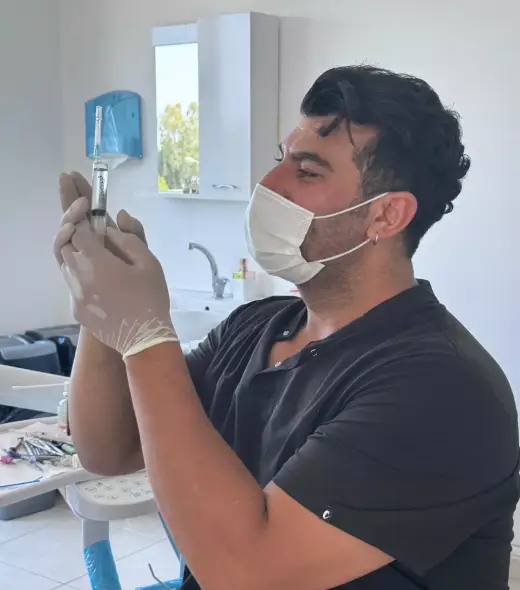
Dt. Cebrail Sağlam, dentist in Alanya
Dt. Cebrail Sağlam preparing an anaesthetic during treatment

What to Do Before Your Appointment

The steps below are general first-aid measures, not a substitute for being seen — their purpose is to manage a situation safely until you can get to a dentist.

Toothache

Rinse gently with warm salt water and floss carefully around the painful tooth in case trapped food is contributing to the pain. Over-the-counter pain relief taken as directed on the packaging can help manage discomfort in the meantime. Avoid placing aspirin directly against the gum or tooth, which does not relieve dental pain this way and can irritate or burn the tissue. Avoid very hot, cold, or sugary food and drink, which often make tooth pain worse.

Dental Abscess or Swelling

A visible swelling, especially one that’s spreading or accompanied by fever, needs prompt evaluation, since an untreated abscess can worsen quickly. Rinsing gently with warm salt water several times a day can offer some relief while you arrange to be seen. Do not attempt to drain or lance a swelling yourself — this needs to be done by a dentist under proper conditions to avoid spreading the infection.

Fractured or Broken Tooth

Rinse your mouth gently with warm water and, if you have the broken piece, keep it moist — in milk or wrapped in a clean, damp cloth — and bring it with you, since it can sometimes still be useful for repair. Cover any sharp edge with dental wax or, if unavailable, sugar-free chewing gum, to protect your tongue and the inside of your cheek until you’re seen. Apply a cold compress to the outside of your face near the area if there’s swelling.

Lost Filling or Crown

Keep the area clean and, if the crown itself is intact, it can sometimes be temporarily reseated with an over-the-counter dental cement available from a pharmacy, following the product’s instructions, purely as a short-term measure until you’re seen. Avoid chewing on that side of your mouth, and steer clear of very hot, cold, or sticky food, since the exposed tooth surface is often more sensitive.

Knocked-Out Adult Tooth

This is one of the few genuine time-critical dental emergencies: a knocked-out permanent tooth has the best chance of being saved if it’s replanted within about 30 to 60 minutes. Handle the tooth only by the crown (the visible chewing part), never the root, and try to gently rinse off visible dirt without scrubbing it. If possible, reinsert it into the socket and hold it in place by gently biting down; if that isn’t possible, keep it in milk or a saliva bath (inside your own cheek) rather than letting it dry out, and get to a dentist as quickly as you can. This does not apply to baby teeth, which are not reinserted.

When to Seek Emergency Medical Care Instead

Some situations go beyond what a dental visit alone addresses, and need a hospital emergency department rather than — or in addition to — a dental appointment:

  • Facial swelling that is spreading rapidly, or affecting your ability to breathe or swallow
  • A high fever alongside dental swelling or pain
  • Significant trauma to the face or jaw, particularly with a head injury
  • Uncontrolled bleeding that doesn’t respond to steady, gentle pressure

If any of these apply, treat it as a medical emergency first.

What Treatment Involves Once You Are Seen

Once you’re examined, treatment addresses the specific problem: a severe toothache may need a temporary or definitive filling, or a root canal if the tooth’s nerve is involved (see the root canal page for what that involves); an abscess is drained under controlled conditions and the underlying infection addressed, sometimes alongside antibiotics; a fractured tooth may be restored with a temporary filling as an immediate fix, with a more permanent restoration such as a crown planned afterward; a lost filling or crown is generally reseated or refitted, often initially with a temporary material while a longer-term solution is arranged. Temporary fillings and temporary crowns are specifically designed to protect a tooth and manage symptoms for a limited period, not as a permanent solution — they’re a bridge to the definitive treatment that follows.

Before you decide

Not sure whether this applies to your teeth?

The only way to know is an examination. Ask a question first if you would rather understand the options before booking anything.

Scheduling an Emergency Appointment

If you’re dealing with a dental emergency, the most useful next step is to contact the practice as soon as possible to explain your symptoms and arrange a visit. See the contact page for how to reach us.

FAQ

Frequently asked questions

Rinse gently with warm salt water, floss carefully around the tooth in case food is trapped, and take over-the-counter pain relief as directed on the packaging. Avoid placing aspirin against the gum, and avoid very hot, cold, or sugary food and drink, which often make the pain worse.

It needs prompt evaluation. An abscess is a pocket of infection that can spread if left untreated, and swelling accompanied by fever is a sign it may be progressing. Warm salt water rinses can offer some relief while you arrange to be seen, but the infection itself needs to be treated by a dentist, not managed at home.

Rinse gently with warm water, save any broken piece by keeping it moist, and cover a sharp edge with dental wax or sugar-free gum to protect your tongue and cheek. A cold compress can help with any swelling. Get in touch with the practice as soon as you can to arrange to be seen.

It depends on how it feels. If the exposed tooth is painful or very sensitive, it’s worth being seen promptly. If it’s comfortable, it’s still best not to leave it too long, since the tooth underneath is more exposed than usual in the meantime. A pharmacy dental cement can offer a short-term fix, but it isn’t a substitute for being seen.

Sometimes, if you act quickly. Handle it only by the crown, not the root, rinse off visible dirt gently, and try to reinsert it into the socket if you can, or keep it in milk otherwise. The chance of successfully replanting a knocked-out adult tooth drops significantly after about 30 to 60 minutes, so getting to a dentist quickly matters more than almost anything else in this situation.

See the contact page for current ways to reach the practice, and explain your symptoms clearly so the visit can be arranged appropriately.

Next step

Questions about this treatment?

Every case is different. The most useful first step is an examination, where the options for your teeth can be explained in person.