Skip to content Skip to footer
Prosthodontics

E-max Crowns

E-max crowns are made from lithium disilicate, a glass-ceramic known for its translucency and natural light-handling, which is why they are widely used for a single front-tooth crown. They are less flexurally strong than zirconia, so they are used more cautiously for molars or long bridges. Costs are not published online and are set out in a written plan at consultation.

What an E-max Crown Is and Who It Suits

“E-max” is the name commonly used for lithium disilicate glass-ceramic, a metal-free crown material valued for the way it transmits light — closer to natural tooth enamel than most other ceramics. That makes restorations on front teeth harder to distinguish from the natural tooth next to them.

E-max tends to suit:

  • A single crown on a front tooth, especially one visible when smiling.
  • Patients who prioritize a natural, translucent appearance over maximum load-bearing strength.
  • Inlays, onlays, and some veneer cases — see the laminate veneers page for veneers specifically.

It is used more cautiously, alone, for long-span bridges or molars carrying heavy chewing force, particularly in patients who grind their teeth — zirconia is often the better fit there (see the comparison below).

E-max restorations can be produced two ways: pressed, where the ceramic is heat-pressed into a mold for a very precise, dense result, or milled, where it is cut from a solid block with CAD/CAM technology, which can allow a faster turnaround. Both use the same lithium disilicate material — the technique used depends on the laboratory’s equipment and the specific case.

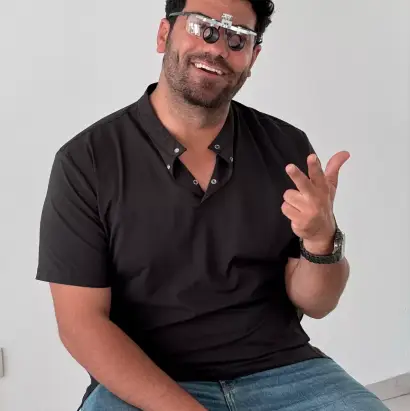
Dt. Cebrail Sağlam, dentist in Alanya
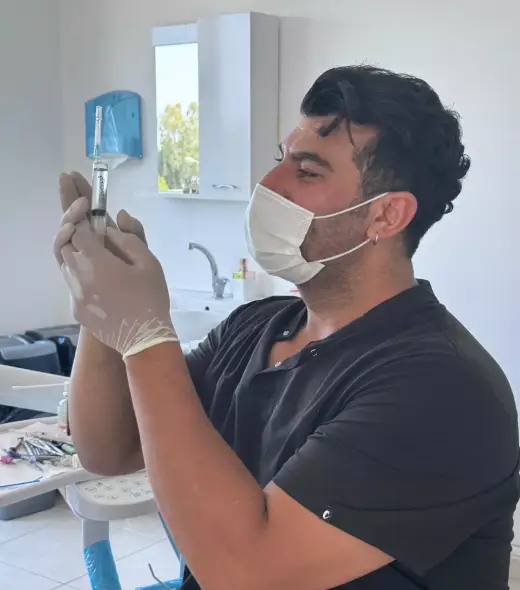
Dt. Cebrail Sağlam preparing an anaesthetic during treatment

How E-max Crowns Are Made and Fitted

The process is similar to other crowns, with a few differences:

  1. Examination and preparation. The tooth is shaped to make room for the crown. Because there is no opaque metal to hide, preparation for an E-max crown can sometimes be slightly more conservative than for a metal-based crown.
  2. Impression. A digital scan or physical impression is taken.
  3. Temporary crown. Protects the prepared tooth while the permanent one is fabricated.
  4. Laboratory fabrication. The crown is pressed or milled from a lithium disilicate ingot or block, then shaded to match the adjacent teeth.
  5. Fitting. The crown is tried in and checked, then bonded or cemented in place. E-max crowns are frequently bonded rather than simply cemented, which can add strength to the final restoration.

Visits and Timeline

Typically two visits: preparation and impression, then fitting once the crown returns from the laboratory. Turnaround is commonly one to two weeks, depending on the laboratory and case. The temporary crown worn in between is functional but not meant to match the final shade or shape precisely.

E-max vs Zirconia vs Porcelain-Fused-to-Metal

  • E-max vs zirconia. E-max’s light transmission gives a more natural look on a visible front tooth, but its flexural strength — roughly 350 to 500 MPa depending on the pressed or milled form — is lower than zirconia’s. For molars, long bridges, or a heavy bite, zirconia is usually the more durable choice. See the zirconia crowns page for that side of the comparison.
  • E-max vs PFM. E-max is metal-free, so there is no risk of a dark line showing at the gumline as gums recede, and no metal-related sensitivity.
  • Choosing between them. A dentist weighs the remaining tooth structure, the bite force at that tooth, and how visible it is when deciding which material fits the case.
Before you decide

Not sure whether this applies to your teeth?

The only way to know is an examination. Ask a question first if you would rather understand the options before booking anything.

Who Should Wait Before Getting an E-max Crown

  • A heavily worn bite from grinding (bruxism) affecting a molar or a bridge site may be better suited to zirconia, or to E-max combined with a night guard.
  • Insufficient remaining tooth structure may need a buildup first.
  • Active gum or root infection at the site should be treated before a permanent crown is placed.
  • Patients planning teeth whitening should complete it before an E-max crown is made, so the crown’s shade can be matched to the final color of the surrounding teeth.

Aftercare

Care for an E-max crown as you would a natural tooth — brushing, flossing, and regular check-ups. Avoid biting very hard objects, since ceramic crowns can chip under sudden, concentrated force. Mild temperature sensitivity in the first few days is common and usually settles.

FAQ

Frequently asked questions

Exact costs are not published online, since they depend on the number of teeth, case complexity, and laboratory work. A written treatment plan is provided at consultation.

E-max transmits light more like natural enamel and suits a single visible front tooth. Zirconia is stronger and better suited to molars, bridges, and a heavy bite. See the zirconia crowns page for the full comparison.

In the region of 10 to 15 years is a commonly cited general range for a well-maintained ceramic crown used on an appropriate tooth, with regular check-ups. This is not a guarantee — it depends on where the crown is placed, bite force, and hygiene.

Yes — their light transmission is one of the closest available to natural tooth enamel, which is why they are frequently chosen for front teeth.

Yes, E-max is one of the materials used in smile-makeover cases involving crowns. See the smile makeover page and the laminate veneers page for related options.

They are durable for their intended use on appropriately selected teeth, but their fracture toughness is lower than zirconia’s. Case selection — the right tooth, the right bite — matters more for E-max than for zirconia.

No. A veneer covers only the front surface of a tooth; a crown covers the entire visible tooth. See the laminate veneers page for how veneers work.

No — ceramic does not respond to teeth-whitening products the way natural enamel does. If whitening is planned, it’s generally done before the crown is made, so the lab can match the crown’s shade to the final, whitened color of the surrounding teeth.

E-max can be used for a very short bridge replacing a single tooth in a lower-load area, but because of its lower flexural strength it is used more cautiously for bridges than zirconia, which is generally the preferred material for multi-unit spans. See dental bridges for how bridge material is chosen.

The try-in step exists for this reason — fit and shade are checked before final cementation, and adjustments can be discussed at that stage. A significant shade change requested after full cementation may mean remaking the crown.

No special products are needed — normal brushing, flossing, and routine check-ups are enough. As with any ceramic crown, avoiding very hard foods and objects reduces the small risk of chipping over time.

Next step

Questions about this treatment?

Every case is different. The most useful first step is an examination, where the options for your teeth can be explained in person.