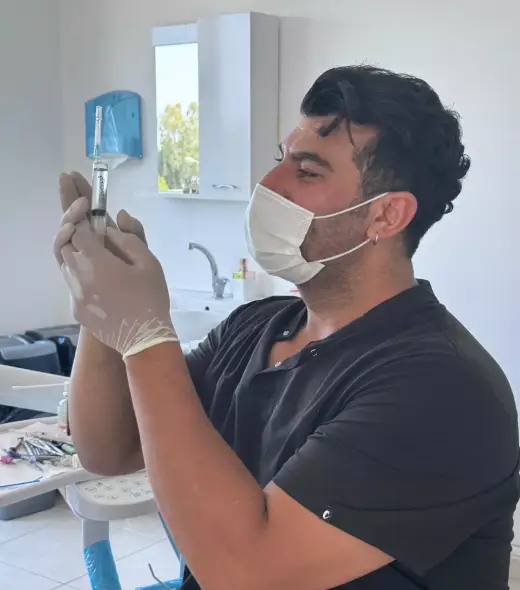
Aesthetic Composite Bonding in Alanya, Turkey
Composite bonding is tooth-colored resin applied directly to a tooth and shaped by hand to fix chips, gaps, discoloration, or minor shape issues. Dt. Cebrail Sağlam offers aesthetic composite bonding in Alanya. Most bonding is completed in a single visit, needs little or no enamel removal, and is more reversible than veneers, though it doesn’t last as long.
What Composite Bonding Is and Who It Suits
Bonding uses the same type of resin used in tooth-colored fillings, but applied and sculpted for appearance rather than to repair a cavity. It’s built up in thin layers directly on the tooth, then shaped and polished to match the surrounding teeth. Because it doesn’t require a dental laboratory, it can often be completed in one appointment.
It suits patients who want to fix a chipped edge, close a small gap between front teeth, even out a slightly uneven tooth, or mask minor discoloration — changes that don’t require reshaping several teeth at once. It’s a common choice for patients who want a conservative first step before committing to something more permanent, or who specifically want to avoid having enamel removed. It is not a substitute for orthodontics if the underlying issue is tooth position or a misaligned bite, and it is usually not the right option for large color changes across many teeth, where veneers tend to give a more even, longer-lasting result.
How the Procedure Works
- Assessment and shade matching. The dentist examines the tooth or teeth involved and selects a resin shade that matches the surrounding natural teeth.
- Light surface preparation. The tooth surface is gently roughened (etched) so the resin bonds securely; this typically removes little to no enamel, unlike veneer preparation.
- Layering the resin. Composite resin is applied in thin layers directly onto the tooth and shaped by hand to build the desired form — closing a gap, rebuilding a chipped edge, or adjusting the tooth’s outline.
- Curing. Each layer is hardened with a curing light before the next is added, so the final shape is built up gradually rather than applied all at once.
- Shaping and polishing. Once the shape is right, the bonding is trimmed, contoured, and polished to match the sheen of the adjacent teeth and feel smooth against the tongue and lips.
- Bite check. The dentist checks that the bonded tooth doesn’t interfere with the bite before the patient leaves.
How Many Visits It Takes
Most composite bonding is completed in a single visit, since it doesn’t require a dental laboratory. A single tooth typically takes well under an hour; bonding several teeth in the same visit takes longer, since each tooth is shaped individually by hand. Complex cases involving many teeth are sometimes split across two visits so the dentist can compare the result across the whole smile before final polishing.
Bonding vs. Other Options
- Composite bonding vs. porcelain veneers: bonding is faster, needs less chair time, and is reversible — but it’s more prone to staining and typically needs touch-ups or replacement sooner than porcelain. See the full comparison on the laminate veneers page.
- Composite bonding vs. indirect composite veneers: the resin material is similar, but indirect veneers are fabricated in a lab and bonded in a second visit, which generally makes them more durable than resin sculpted directly at the chair.
- Direct bonding vs. crowns: bonding adds material to an existing tooth; it doesn’t replace a tooth or address a tooth so damaged it needs full coverage. For teeth that need more structural support, zirconia or e.max crowns are the relevant options.
Not sure whether this applies to your teeth?
The only way to know is an examination. Ask a question first if you would rather understand the options before booking anything.
Contraindications and Limitations
- Heavy staining habits (coffee, tea, red wine, tobacco) affect composite resin more than porcelain, so bonding may need more frequent polishing or touch-ups for patients with these habits.
- Bruxism (teeth grinding) shortens the lifespan of bonding considerably, since the resin is softer than natural enamel or porcelain; a night guard is generally recommended for patients who grind.
- Large color changes or reshaping several teeth are usually better handled with veneers, which give a more even, predictable, and longer-lasting result across multiple teeth.
- Active decay or gum disease must be treated first — bonding is a cosmetic and minor restorative technique, not a treatment for disease.
- Bonding is repairable but not indestructible. It can chip under hard biting forces and will need occasional maintenance over the years; this is a trade-off for its reversibility, not a flaw specific to any one case.
Aftercare
Composite bonding sets fully under the curing light during the appointment, so there’s no waiting period before eating normally, though many dentists suggest avoiding heavily staining foods and drinks for the first 24–48 hours while the surface is newest. Long-term care is largely the same as for natural teeth: regular brushing and flossing, avoiding biting hard objects like ice or fingernails, and routine dental checkups so any chipping or wear is caught early. Bonded teeth can be repaired or touched up directly at the chair if they chip, which is one of the practical advantages over veneers. How long a specific bonding job lasts depends heavily on diet, grinding habits, and how well it’s maintained — some patients need touch-ups within a few years, others go much longer.
Frequently asked questions
How much does composite bonding cost in Turkey?
Cost depends on how many teeth are treated and how much reshaping is involved, so it isn’t a fixed figure. We don’t publish set prices; a consultation gives an accurate estimate for your specific case.
Composite bonding vs. veneers — which is better?
Neither is universally better; they suit different goals. Bonding is faster, more reversible, and needs little to no enamel removal, but stains more easily and generally needs redoing sooner. Veneers require enamel reduction and lab work but resist staining better and tend to last longer. Patients who want a conservative, reversible first step often start with bonding; patients planning a longer-term, more uniform result often choose veneers.
Is composite bonding reversible?
Largely yes, especially compared to veneers. Because bonding typically requires little to no enamel removal, the underlying tooth structure is mostly preserved, and the bonding material can be removed or replaced without permanently altering the tooth in most cases.
Does composite bonding stain?
Yes, more than porcelain. Composite resin can pick up stains from coffee, tea, red wine, and tobacco over time, especially in the first days after application. Regular polishing at checkups helps manage this, and heavily stained bonding can be touched up or replaced.
How long does composite bonding last?
It varies by case — factors like bite force, grinding habits, and diet all affect how long bonding holds up, so ranges quoted online should be read as rough guides, not guarantees. Bonding generally needs more frequent maintenance than porcelain veneers.
Can composite bonding fix crooked or overlapping teeth?
Only to a limited degree — bonding can visually even out a slightly uneven edge or close a small gap, but it doesn’t move teeth. Significant crowding or misalignment needs orthodontic treatment, sometimes combined with bonding afterward for final touch-ups.
Is composite bonding painful?
Most bonding involves little to no enamel removal and no need for anesthesia, so it’s generally a comfortable, low-discomfort procedure. If the tooth also needs a cavity treated at the same time, that part may involve local anesthesia as it normally would for a filling.
Questions about this treatment?
Every case is different. The most useful first step is an examination, where the options for your teeth can be explained in person.